Launch offer — valid today only

The ASP Exam, One Sketched Page per Concept All 9 ASP11 Domains, Every Calculation Worked in the Same Order

Incidence rates, trench slopes, LOTO, NIOSH lifting, exposure limits: in your notes, a wall of text. Here every topic fits on one page, with the drawing and what you need to remember. 66 illustrated pages.

YES, I WANT THE SKETCHBOOK

🔒 Secure checkout · PDF by email · 30-day guarantee

One topic per pagethe drawing shows you the concept and the text walks you through it
66 illustrated pages11 parts, from the ASP exam itself to the final review
Up-to-date sourcesBCSP ASP11 blueprint, OSHA 29 CFR 1910/1926 and NIOSH Pub. 94-110

This Is What the Pages You Will Study Look Like

One topic per page, the drawing that shows you how it works, and the boxes with what you need to know:

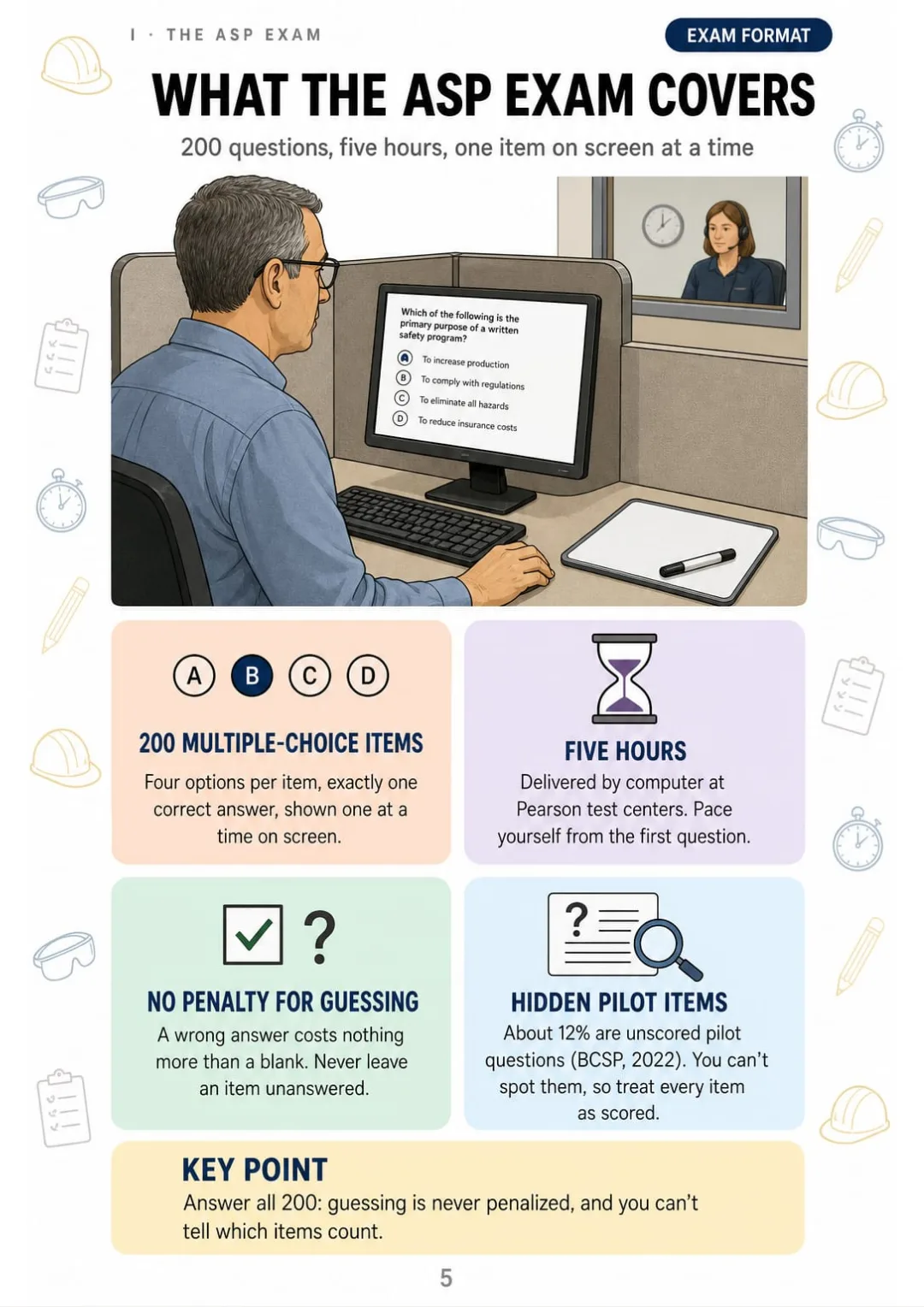
200 items · 4 options · 5 hours · about 12% unscored pilots
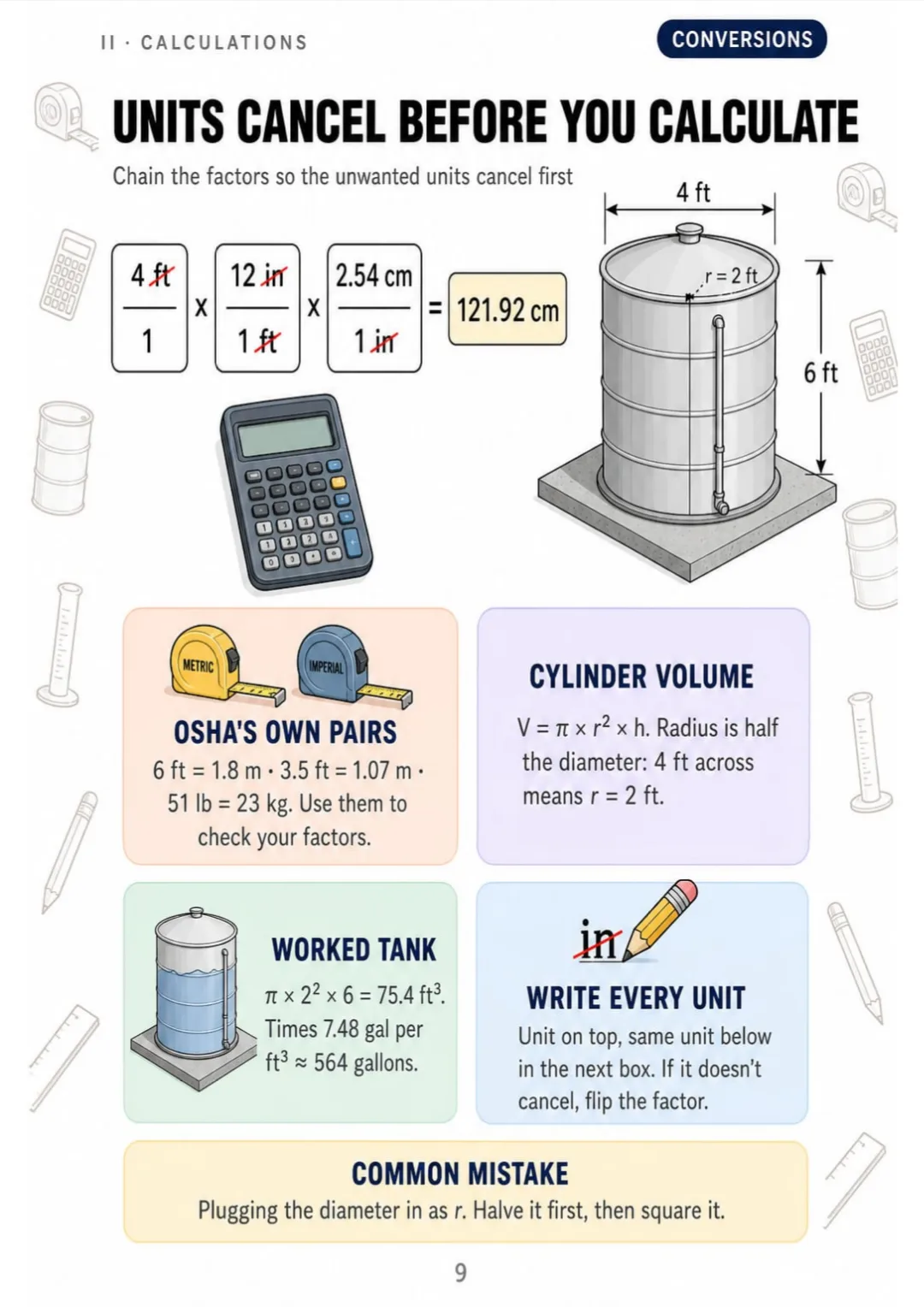
Factor-label chain + a 4 ft × 6 ft tank = 75.4 ft³
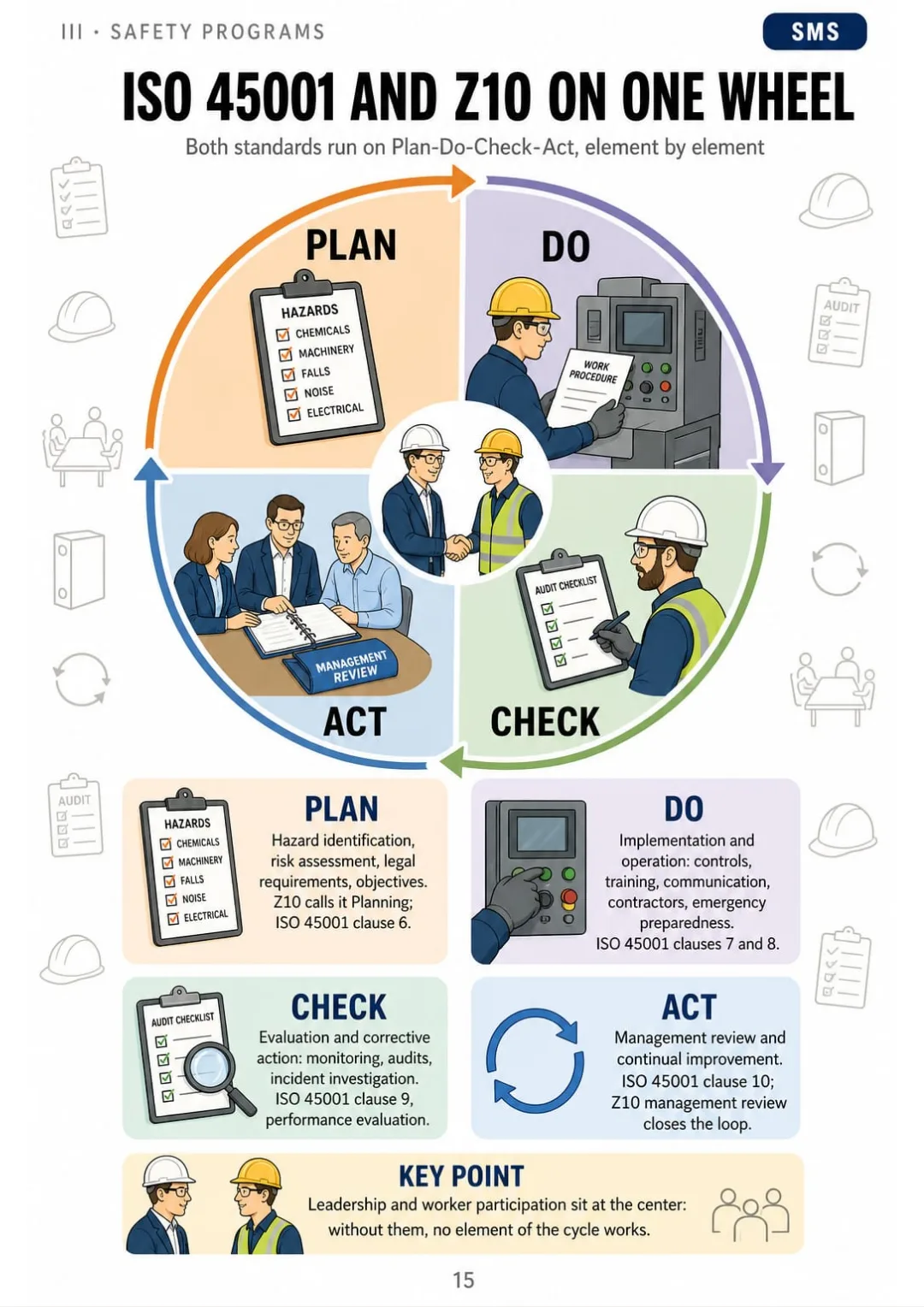
ISO 45001 and ANSI Z10 elements placed on one Plan-Do-Check-Act wheel
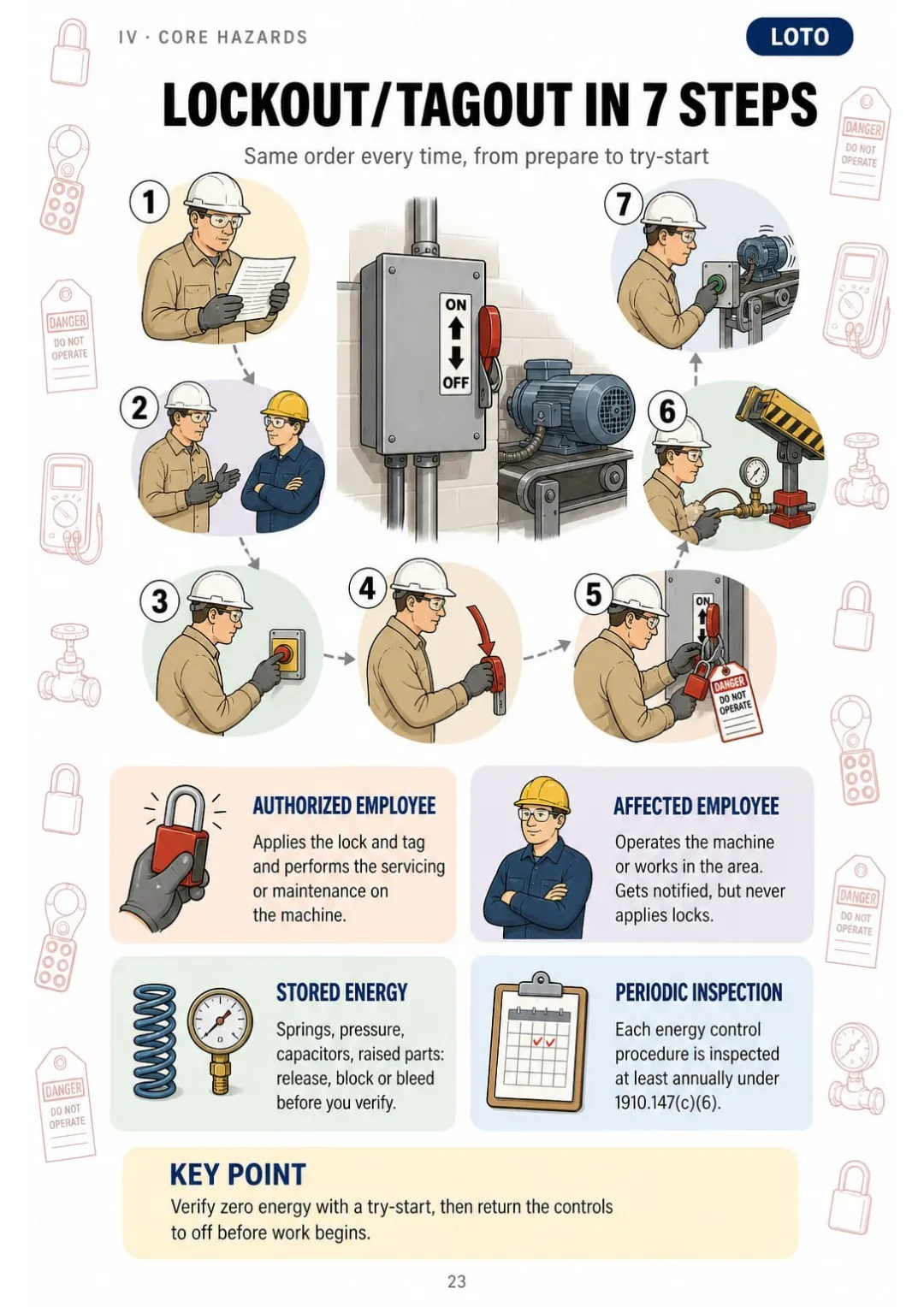
Seven LOTO steps drawn on one disconnect, from prepare to verify zero energy
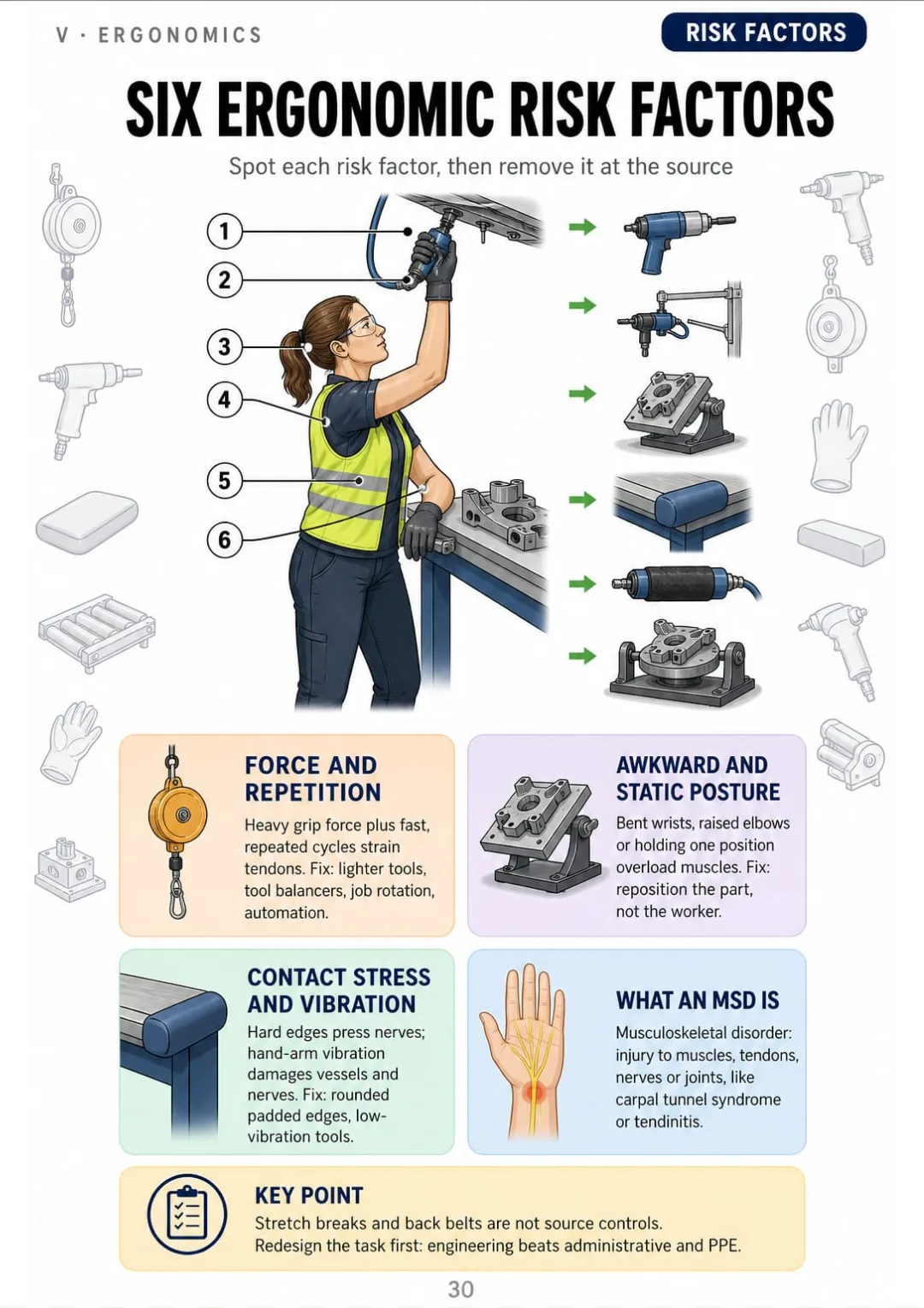
Force, repetition, posture, contact stress, vibration, static load: each one with its source control
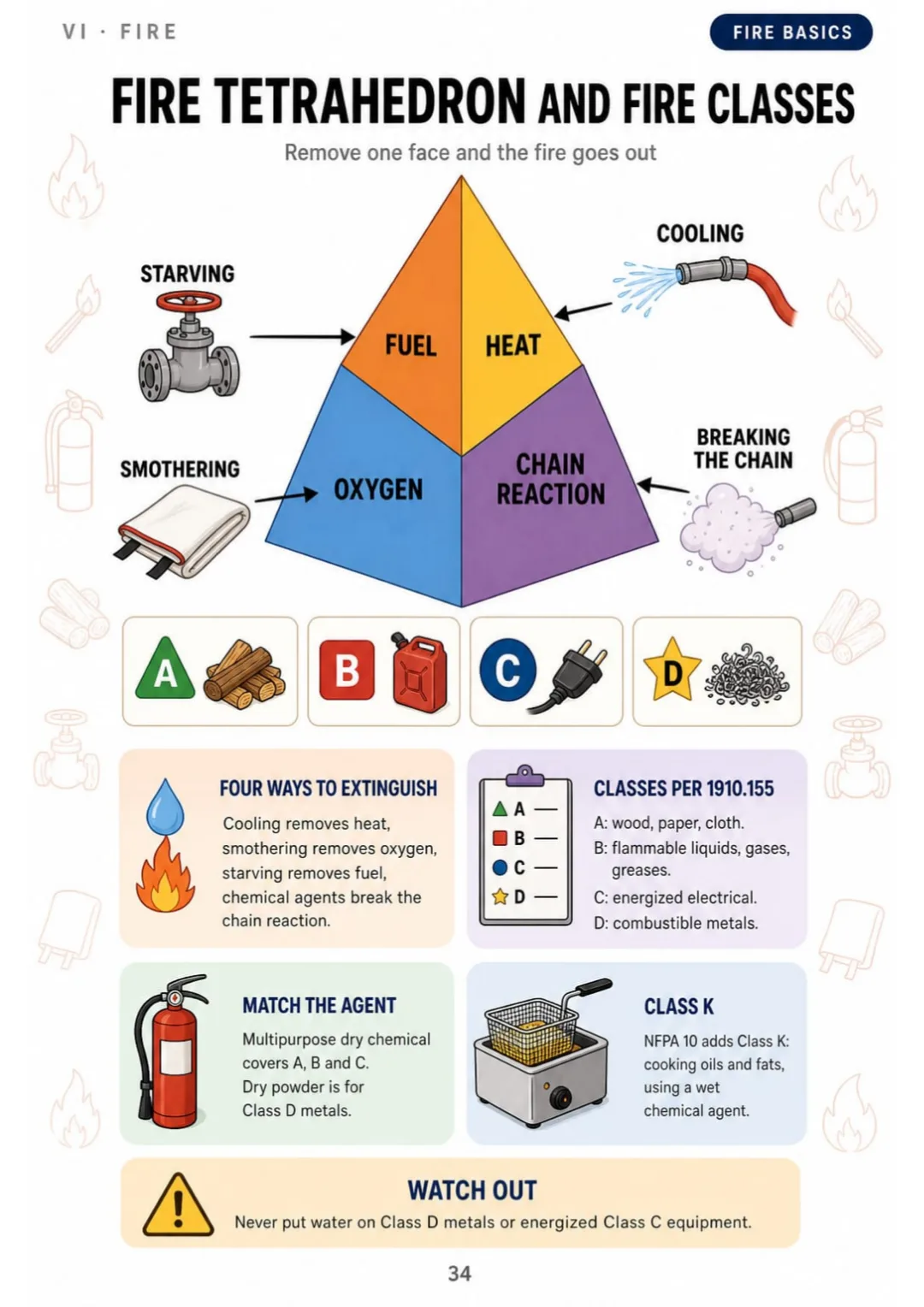
Fuel, heat, oxygen, chain reaction, plus classes A, B, C and D from 29 CFR 1910.155
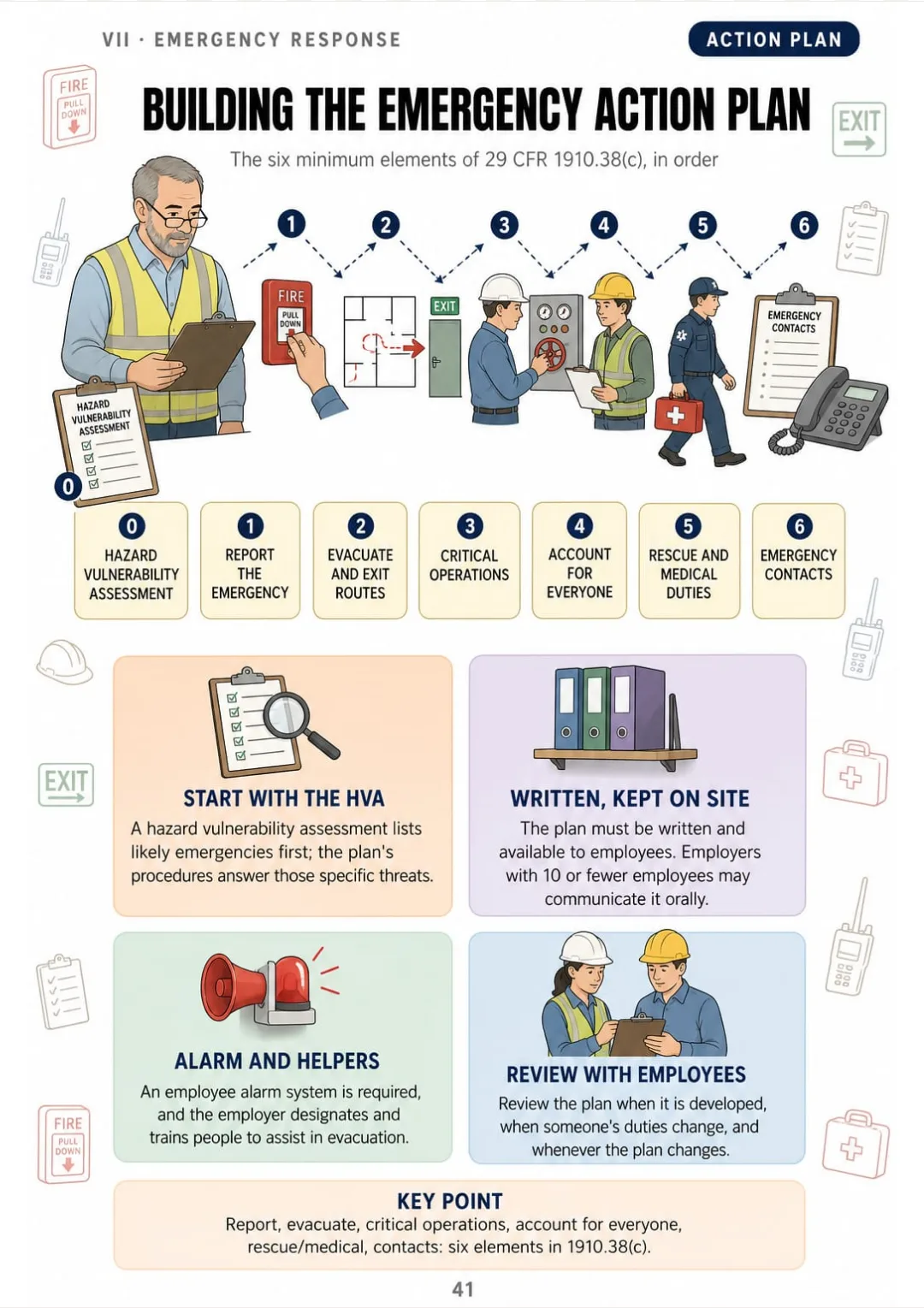
29 CFR 1910.38(c): reporting, evacuation, critical operations, headcount, rescue/medical duties and contacts.
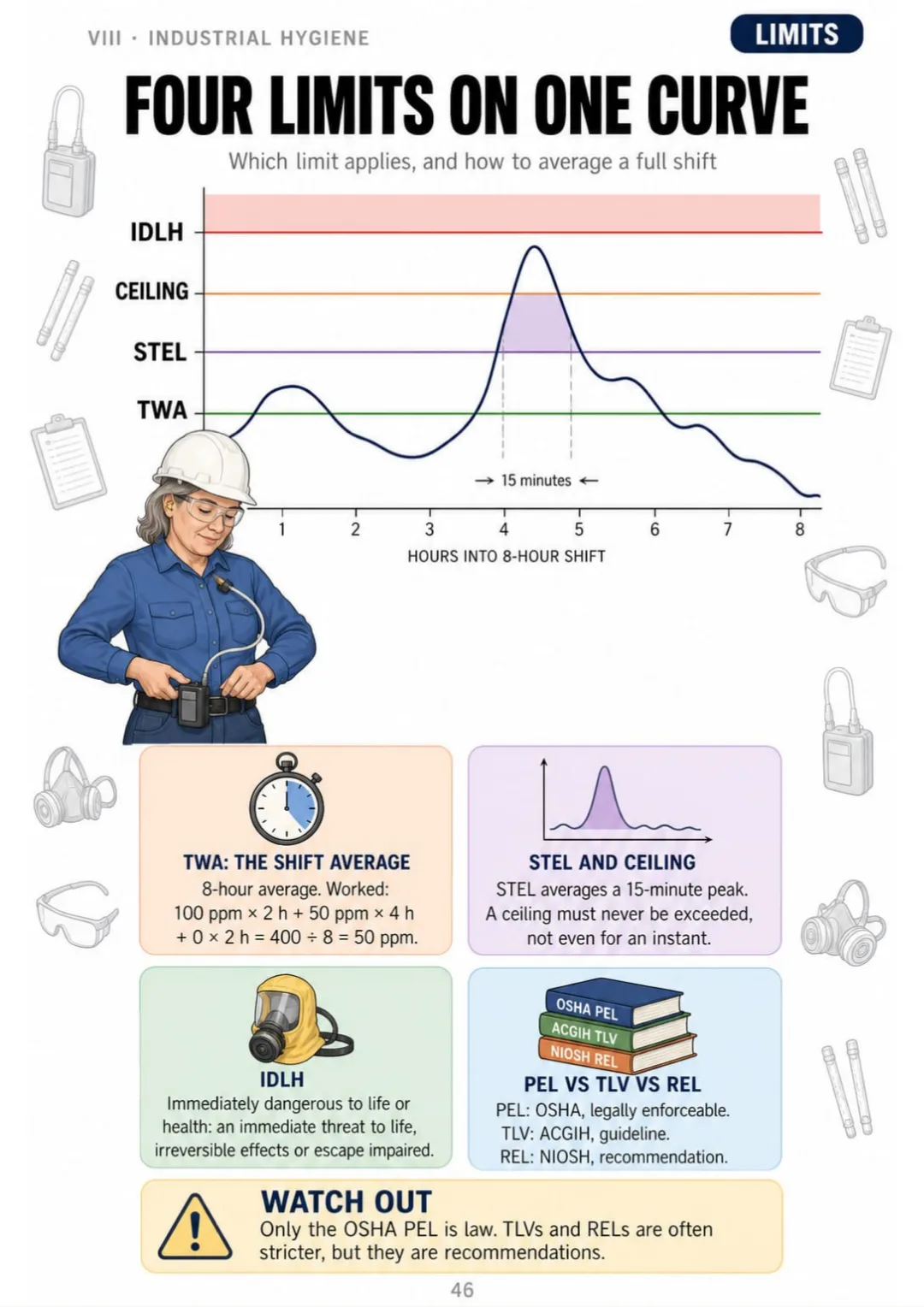
100 ppm × 2 h + 50 ppm × 4 h + 0 × 2 h = 400 ÷ 8 = 50 ppm TWA

Swipe to see more →

These are real pages from the book. The table of contents is the full one: 11 parts and 62 topics.

It's That No One Put It in Order.

You've read the ISO 45001 and ANSI Z10 elements three times. You close the review guide...

...and you can't say which element goes in Plan and which one goes in Check. It was just one line after another.

ISO 45001 and ANSI Z10 elements placed on one Plan-Do-Check-Act wheel

Here the two standards are one drawn wheel: Plan, Do, Check, Act, with every ISO 45001 and Z10 element placed in its own slice.

And on the pages next to it, every topic has its own: lockout/tagout in 7 steps, the fire tetrahedron, the emergency action plan, the four exposure limits and the NIOSH lifting equation.

First you understand why it works that way. Then the order stays with you on its own.

SEE THE DIFFERENCE

Stop Memorizing Formulas You Can't Picture:

THIS
  • Pages and pages of dense text
  • Formulas without a single drawing
  • On exam day, you don't know where to start
Dimensional analysis, also referred to as the factor-label method, requires that each quantity be multiplied by one or more conversion factors expressed as ratios equal to unity, arranged such that undesired units appear in both the numerator and the denominator and are thereby cancelled. For a vertical cylindrical vessel, volume is determined by V = πr²h, where r represents one-half of the internal diameter. A vessel of 4 ft diameter and 6 ft height therefore yields approximately 75.4 ft³, which may subsequently be converted to gallons by applying 7.48 gal/ft³ prior to evaluating storage capacity limits.
FOR THIS
  • Every formula drawn out
  • One topic per page, with the rules in boxes
  • You remember it because you've seen it
Factor-label chain + a 4 ft × 6 ft tank = 75.4 ft³
CONTENTS

Take a Look at the 11 Parts and 62 Topics

The exam, safety math, safety programs and risk, core hazards, ergonomics, fire, emergencies, industrial hygiene, training, environmental and legal essentials, and a final review: 66 pages, 62 sketched topics

IThe ASP Exam · pp. 5-8
  1. What the ASP Exam Covers
  2. Nine Domains and Their Weights
  3. Eligibility, Fees and Retake Rules
  4. Calculator, Embedded Formulas and Timing
IIMathematical Calculations · pp. 9-14
  1. Unit Conversions and Storage Capacity
  2. Rigging Loads, Force and Friction
  3. Trench Slope Angle and Depth Ratio
  4. Fall Clearance and Arresting Force
  5. Incidence Rates and Lost Time
  6. Statistics, Probability and Cost-Benefit
IIISafety Programs and Risk Analysis · pp. 15-22
  1. Safety Management Systems: ISO 45001 and Z10
  2. The Hierarchy of Controls
  3. Hazard Analysis: FMEA, Fault Tree, What-If
  4. Risk Matrix Ranking
  5. GHS Labels and Safety Data Sheets
  6. Management of Change
  7. Leading vs Lagging Indicators
  8. Incident Investigation and Root Cause
IVCore Hazard Fundamentals · pp. 23-29
  1. Hazardous Energy and Lockout/Tagout
  2. Ohm's Law, Power and Circuits
  3. Excavation Protective Systems
  4. Falls, Slips and Trips
  5. Machine Guarding and Forklifts
  6. Scaffolds, Cranes and Rigging
  7. Confined Spaces and Process Safety
VErgonomics · pp. 30-33
  1. Ergonomic Risk Factors and MSDs
  2. Workstation Design and Posture
  3. The NIOSH Lifting Equation
  4. RULA, REBA and Anthropometry
VIFire Prevention and Protection · pp. 34-40
  1. Fire Tetrahedron and Fire Classes
  2. Flammable Limits and Flash Point
  3. Flammable Storage and Segregation
  4. Static, Bonding and Hazardous Locations
  5. Arc Flash, GFCI and Overcurrent
  6. Hot Work and Combustible Dust
  7. Detection, Sprinklers and Extinguishers
VIIEmergency Preparedness and Response · pp. 41-45
  1. Building an Emergency Response Plan
  2. Natural, Human and Biological Threats
  3. Drills, Evacuation and First Aid
  4. Incident Command and Business Continuity
  5. Workplace Violence and Lone Workers
VIIIIndustrial Hygiene and Occupational Health · pp. 46-52
  1. Exposure Limits: TWA, STEL, Ceiling, IDLH
  2. Routes of Entry, Acute vs Chronic
  3. Chemistry Basics: pH and Gas Laws
  4. Noise, Decibels and Hearing Conservation
  5. Heat Stress and Cold Stress
  6. Ionizing Radiation and Inverse Square
  7. Biological Hazards and Universal Precautions
IXTraining, Education and Communication · pp. 53-57
  1. Adult Learning and Training Methods
  2. Needs Analysis and Baseline Competency
  3. Measuring Training Effectiveness
  4. Safety Culture and Psychological Safety
  5. Human Factors and Risk Perception
XEnvironmental and Legal Essentials · pp. 58-63
  1. Waste Classification and Disposal
  2. Spills, Air, Water and Land Impacts
  3. ISO 14001, Conservation and ESG
  4. Liability and Multi-Employer Worksites
  5. Contracts, Records and Risk Transfer
  6. Worker Impairment and Scope Limits
XIFinal Review · pp. 64-66
  1. Must-Know Numbers and Formulas
  2. Frequent Mix-Ups
  3. Exam Day Checklist and the Road to CSP

What If Every Topic Fit on a Single Page?

Picture this:

Instead of rereading half a page on the NIOSH lifting equation without being able to see it...

...you open the page and find one worker lifting a box, with H, V, D and A marked right on the drawing and every multiplier in its place, starting from 51 lb.

Force, repetition, posture, contact stress, vibration, static load: each one with its source control

And incidence rates, trench slopes, lockout/tagout, fire classes and exposure limits turn into drawings and tables you can read at a glance.

You stop repeating and start understanding.

That's what The ASP Exam Sketchbook does: 66 pages in 11 parts, one topic per page, and at the end the must-know numbers and formulas, the frequent mix-ups and an exam day checklist. What you see in order is easier to remember.

Because what your brain sees organized, it remembers.

Here Is What You Get with The ASP Exam Sketchbook:

Ipp. 5-8

The ASP Exam

What the exam covers, the nine domains and their weights, eligibility, fees and retake rules, and the on-screen calculator and timing.

IIpp. 9-14

Mathematical Calculations

Unit conversions and storage capacity, rigging loads and friction, trench slope ratios, fall clearance and arresting force, incidence rates, and statistics and cost-benefit.

IIIpp. 15-22

Safety Programs and Risk Analysis

ISO 45001 and Z10, the hierarchy of controls, FMEA, fault tree and what-if, risk matrices, GHS labels and SDSs, management of change, leading vs. lagging indicators and root cause.

IVpp. 23-29

Core Hazard Fundamentals

Lockout/tagout, Ohm's law and circuits, excavation protective systems, falls, machine guarding and forklifts, scaffolds and cranes, confined spaces and process safety.

Vpp. 30-33

Ergonomics

Ergonomic risk factors and MSDs, workstation design and posture, the NIOSH lifting equation, RULA, REBA and anthropometry.

VIpp. 34-40

Fire Prevention and Protection

The fire tetrahedron and fire classes, flammable limits and flash point, storage, bonding and hazardous locations, arc flash and GFCI, hot work and combustible dust, and sprinklers and extinguishers.

VIIpp. 41-45

Emergency Preparedness and Response

The emergency action plan, natural, human and biological threats, drills and evacuation, incident command and business continuity, and workplace violence.

VIIIpp. 46-52

Industrial Hygiene and Occupational Health

TWA, STEL, ceiling and IDLH, routes of entry, pH and gas laws, noise and hearing conservation, heat and cold stress, radiation and the inverse square law, and biological hazards.

IXpp. 53-57

Training, Education and Communication

Adult learning and training methods, needs analysis, measuring training effectiveness, safety culture and human factors.

Xpp. 58-63

Environmental and Legal Essentials

Waste classification, spills and environmental impacts, ISO 14001 and ESG, liability and multi-employer worksites, contracts and records, and worker impairment.

XIpp. 64-66

Final Review

The must-know numbers and formulas, the frequent mix-ups, and an exam day checklist with the road to the CSP.

At the end of the book: Must-know numbers and formulas, frequent mix-ups and an exam day checklist.
And That Is Not All: 2 More Books, Free

ASP Formula Workbook: 40 Problems Worked Step by Step

BONUS 1: «ASP Formula Workbook: 40 Problems Worked Step by Step»

Value on its own: US$ 17.90

The exam gives you no formula sheet, just an on-screen TI-30XS. Here you practice 40 original exam-style problems (incidence rates, slopes, fall clearance, NIOSH lifting, noise, inverse square, Ohm's law, unit conversions) until you can do each one in the same steps.

250 ASP Terms on Cards

BONUS 2: «250 ASP Terms on Cards»

Value on its own: US$ 14.90

Keep the vocabulary of all 9 domains straight, including frequent mix-ups like FMEA vs. fault tree, STEL vs. ceiling, competent vs. qualified. Each card has the term on the front and a one-line definition plus a tiny sketch on the back.

The ASP Exam Sketchbook + 2 Free Books

  • The ASP Exam Sketchbook: 66 illustrated pagesUS$ 87
  • BONUS 1: ASP Formula Workbook: 40 Problems Worked Step by StepUS$ 17.90
  • BONUS 2: 250 ASP Terms on CardsUS$ 14.90
  • High-resolution PDF to printIncluded
Total value US$ 119.80
YOUR PRICE:
US$ 37
You save US$ 82.80
YES, I WANT THE ASP EXAM SKETCHBOOK FOR US$ 37

📄 This is a digital PDF book sent to your email: nothing is printed or shipped.

Secure purchaseEncrypted payment30-day guarantee

PDF by email: The ASP Exam Sketchbook reaches your inbox as a PDF, and the two free books come by email too. One-time payment, no installments or hidden costs.

Is This Book for You?

You just got approved for the ASP

You just got approved for the ASP

The nine domains in blueprint order, one topic per page, so you know where to start and can study at night in short sessions.

Your exam date is close (or you're retaking it)

Your exam date is close (or you're retaking it)

Every calculation worked in the same steps, and at the end the must-know numbers, the frequent mix-ups and an exam day checklist.
You already work in safety

You already work in safety

A visual review of what you do every day: LOTO, trench slopes, fall clearance, NIOSH lifting and exposure limits, with the OSHA section named on the page.

To Sum Up: Here Is What You Get

US$ 119.80US$ 37
YES, I WANT THE ASP EXAM SKETCHBOOK FOR US$ 37

📄 This is a digital PDF book sent to your email: nothing is printed or shipped.

30DAYS
GUARANTEE

30-Day Guarantee

30-day guarantee: tell us what didn't work and we'll refund 100%.

You have 30 days to try The ASP Exam Sketchbook and both bonus books. If it doesn't work for you, tell us what didn't work and we'll refund 100% of what you paid. One-time payment, no subscriptions, no surprises.

Frequently Asked Questions

How do I get the material?

You get The ASP Exam Sketchbook as a high-resolution PDF by email, at the address you enter at checkout, to read on your phone, tablet or computer, or to print. The two bonus books, ASP Formula Workbook and 250 ASP Terms on Cards, come by email too.

Is it a monthly payment or a one-time payment?

A one-time payment of US$ 37. No installments, no subscription.

Who is it for?

For safety coordinators and EHS specialists approved to take the ASP, for anyone retaking it, and for people already in safety who want a visual review. It's not a beginner's intro: it's the 9 domains in order. Check the table of contents above to see every topic.

What sources is it based on?

It follows the current BCSP ASP11 Examination Blueprint, domain by domain and in its order. The content is checked against OSHA 29 CFR 1910 and 1926 (including 1926 Subpart P Appendix B, 1926.502(d)(16), 1910.38, 1910.95 and 1910.155), the Revised NIOSH Lifting Equation (Pub. 94-110), the NIOSH Hierarchy of Controls and the BLS incidence-rate method. The section is named on the page.

Is this official BCSP material?

No. It's an independent study book, not affiliated with or endorsed by BCSP, OSHA, NIOSH or NFPA. It doesn't give you a certificate, CEUs or recertification points: it's a book to study for the ASP exam.

Does it replace my review course?

No. It complements your review course and your employer's training: it gives you every topic on one drawn page so you can review it in order.

Are the practice problems the real exam questions?

No. The 40 problems in the ASP Formula Workbook are original, written for this book in exam style. They're for practice, not official exam questions.

Can I print it?

Yes. It's a high-resolution PDF, so you can print the whole book or just the pages you want to keep on your desk.

What if I don't like it?

You have a 30-day guarantee: tell us what didn't work and we'll refund 100%.

One Last Thing Before You Decide...

You don't have to reread the same page hoping this time it sticks.

You don't have to memorize formulas you can't picture.

And you definitely don't have to walk into the exam without knowing where to start.

There's a simpler way. And it's one click away. Now it's your turn.

One-time payment: US$ 37 · Guarantee: 30 days · PDF by email

YES, I WANT THE ASP EXAM SKETCHBOOK FOR US$ 37

📄 This is a digital PDF book sent to your email: nothing is printed or shipped.